
 ,
Oluseyi Ajayi,
Oluwaseun Oluwasanmi,
Kabiru Abubakar Gulma,
Rogers Bariture Kanee,
Cassandra Akinde,
Precious Uahomo,
,
Oluseyi Ajayi,
Oluwaseun Oluwasanmi,
Kabiru Abubakar Gulma,
Rogers Bariture Kanee,
Cassandra Akinde,
Precious Uahomo,
Background: This study examined the influence of M&E systems on the programmatic performance of public health NGOs in Nigeria, with the overall aim of assessing how the design, implementation, quality, and challenges of M&E systems impact organisational performance. Grounded in results-based management and performance measurement theory, the study conceptualizes M&E systems as managerial control mechanisms influencing organisational outputs and adaptive capacity. Methods: A quantitative research design was adopted using a structured questionnaire administered through Kobo Collect to 249 respondents drawn from national and international public health NGOs. Data were analysed for descriptive statistics and inferential analyses using SPSS version 27. Results: Results revealed that M&E systems are widely institutionalised within Nigerian NGOs, with 94% of organisations having dedicated M&E units and over 80% adopting structured logical frameworks or theories of change for program planning. The findings further established a strong positive relationship between M&E design and programmatic performance (r = 0.747, p < 0.001), confirming that effective M&E structures enhance program effectiveness. A moderate, significant correlation (r = 0.608, p < 0.001) was found between M&E quality and organisational performance. Multiple regression analysis showed that M&E design significantly predicted performance (β = 0.61, p < 0.001), explaining 55.8% of variance (R² = 0.558), while implementation challenges were not statistically significant predictors (p = 0.054). Regression results further showed that sex, organisational role, and NGO type significantly predicted perceived performance, with national NGOs and senior staff reporting lower ratings than international NGOs and operational staff. Conclusions: The study concluded that effective M&E systems serve as vital management tools that drive efficiency, innovation, and strategic learning within public health NGOs. It recommends strengthening technical capacity, aligning donor reporting frameworks with learning objectives, and leveraging digital technologies to enhance data quality and timeliness. The study contributes to knowledge by repositioning M&E from a donor compliance requirement to a strategic business management function essential for improving accountability, sustainability, and organisational performance in the Nigerian NGO sector.
| Published in | Journal of Public Policy and Administration (Volume 10, Issue 1) |
| DOI | 10.11648/j.jppa.20261001.20 |
| Page(s) | 108-122 |
| Creative Commons |
This is an Open Access article, distributed under the terms of the Creative Commons Attribution 4.0 International License (http://creativecommons.org/licenses/by/4.0/), which permits unrestricted use, distribution and reproduction in any medium or format, provided the original work is properly cited. |
| Copyright |
Copyright © The Author(s), 2026. Published by Science Publishing Group |
Monitoring and Evaluation Systems, Public Health NGOs, Organizational Performance
Variable | Frequency | Percentage |
|---|---|---|
Sex | ||
Male | 117 | 47.0 |
Female | 132 | 53.0 |
Age | ||
18-24 | 4 | 1.6 |
25-34 | 139 | 55.8 |
35-44 | 93 | 37.3 |
45-54 | 12 | 4.8 |
55-64 | 1 | 0.4 |
Highest Educational Qualification | ||
Bachelor's degree | 148 | 59.4 |
Diploma | 28 | 11.2 |
Doctorate (PhD) | 9 | 3.6 |
Master's degree | 64 | 25.7 |
Position/Role | ||
Director | 9 | 3.6 |
Finance/Administration Staff | 3 | 1.2 |
M&E Associate | 85 | 34.1 |
Manager | 34 | 13.7 |
Program Analyst | 32 | 12.9 |
Program Associate | 86 | 34.5 |
Years of Work Experience in Public Health NGO Sector | ||
1-3 years | 70 | 28.1 |
4-6 years | 123 | 49.4 |
7-10 years | 32 | 12.9 |
Less than 1 year | 4 | 1.6 |
More than 10 years | 20 | 8.0 |
Length of Service in Current NGO | ||
1-3 years | 116 | 46.6 |
4-6 years | 103 | 41.4 |
7-10 years | 13 | 5.2 |
Less than 1 year | 10 | 4.0 |
More than 10 years | 7 | 2.8 |
Type of NGO | ||
International | 93 | 37.3 |
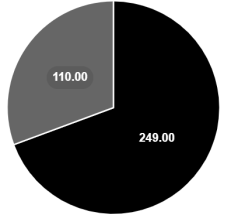
National | 156 | 62.7 |
Influence of M&E Systems on Programmatic Performance | ||
M&E findings inform programmatic decisions | Frequency | Percentages (%) |
Strongly Agree | 129 | 51.8 |
Agree | 98 | 39.4 |
Neutral | 6 | 2.4 |
Strongly Disagree | 12 | 4.8 |
Disagree | 4 | 1.6 |
M&E improved program effectiveness | ||
Strongly Agree | 134 | 53.8 |
Agree | 84 | 33.7 |
Neutral | 13 | 5.2 |
Strongly Disagree | 15 | 6.0 |
Disagree | 3 | 1.2 |
M&E data guide resource allocation decisions in my organisation | ||
Strongly Agree | 91 | 36.5 |
Agree | 116 | 46.6 |
Neutral | 23 | 9.2 |
Strongly Disagree | 15 | 6.0 |
Disagree | 4 | 1.6 |
M&E findings are regularly shared with staff, partners, and stakeholders to improve accountability | ||
Strongly Agree | 114 | 45.8 |
Agree | 106 | 42.6 |
Neutral | 13 | 5.2 |
Strongly Disagree | 13 | 5.2 |
Disagree | 3 | 1.2 |
Design and Implementation of M&E Systems | ||
My organisation uses a structured logical framework (logframe) or theory of change for project planning | ||
Strongly Agree | 69 | 27.7 |
Agree | 135 | 54.2 |
Neutral | 33 | 13.3 |
Strongly Disagree | 5 | 2.0 |
Disagree | 7 | 2.8 |
Indicators for measuring inputs, outputs, outcomes, and impacts are clearly defined | ||
Strongly Agree | 111 | 44.6 |
Agree | 108 | 43.4 |
Neutral | 17 | 6.8 |
Strongly Disagree | 6 | 2.4 |
Disagree | 7 | 2.8 |
My organisation has dedicated staff or units responsible for M&E | ||
Yes | 234 | 94.0 |
No | 15 | 6.0 |
There are periodic reviews (e.g., quarterly/annual) to assess the effectiveness of program implementation through M&E data | ||
Strongly Agree | 125 | 50.2 |
Agree | 100 | 40.2 |
Neutral | 5 | 2.0 |
Strongly Disagree | 12 | 4.8 |
Disagree | 7 | 2.8 |
M&E systems are integrated into overall organisational strategy | ||
Strongly Agree | 93 | 37.3 |
Agree | 130 | 52.2 |
Neutral | 12 | 4.8 |
Strongly Disagree | 8 | 3.2 |
Disagree | 6 | 2.4 |
Challenges in the Utilisation of M&E Systems | ||
Challenges organisation face in implementing M&E systems | Frequency | Percentages (%) |
Inadequate data quality | 39 | 15.7 |
Insufficient funding/resources | 87 | 34.9 |
Limited technical expertise in M&E | 56 | 22.5 |
Low stakeholder buy-in | 45 | 18.1 |
Weak institutional support | 22 | 8.8 |
The challenges listed above significantly limit the use of M&E data in decision-making | ||
Strongly Agree | 27 | 10.8 |
Agree | 134 | 53.8 |
Neutral | 55 | 22.1 |
Strongly Disagree | 7 | 2.8 |
Disagree | 26 | 10.4 |
Donor requirements (e.g., rigid reporting formats) hinder flexible and effective use of M&E data | ||
Strongly Agree | 15 | 6.0 |
Agree | 99 | 39.8 |
Neutral | 65 | 26.1 |
Strongly Disagree | 9 | 3.6 |
Disagree | 61 | 24.5 |
Quality of M&E Practices, Organisational Sustainability and Learning | ||
High-quality M&E practices have helped build resilience and sustainability in my organisation | Frequency | Percentages (%) |
Strongly Agree | 93 | 37.3 |
Agree | 126 | 50.6 |
Neutral | 21 | 8.4 |
Strongly Disagree | 5 | 2.0 |
Disagree | 4 | 1.6 |
M&E processes in my organisation promote a culture of learning and adaptive management | ||
Strongly Agree | 85 | 34.1 |
Agree | 145 | 58.2 |
Neutral | 12 | 4.8 |
Strongly Disagree | 1 | 0.4 |
Disagree | 6 | 2.4 |
Staff are trained and engaged in learning activities based on M&E results | ||
Strongly Agree | 73 | 29.3 |
Agree | 121 | 48.6 |
Neutral | 36 | 14.5 |
Strongly Disagree | 6 | 2.4 |
Disagree | 13 | 5.2 |
The use of M&E results has enhanced stakeholder satisfaction and long-term partnerships | ||
Strongly Agree | 67 | 26.9 |
Agree | 151 | 60.6 |
Neutral | 22 | 8.8 |
Strongly Disagree | 5 | 2.0 |
Disagree | 4 | 1.6 |
M&E drive continuous improvement and ensure organisational sustainability | ||
Strongly Agree | 111 | 44.6 |
Agree | 126 | 50.6 |
Neutral | 8 | 3.2 |
Strongly Disagree | 1 | 0.4 |
Disagree | 3 | 1.2 |
Overall Performance of Public Health NGOs | ||
Performance of Public Health NGOs | Frequency | Percentages (%) |
Good performance | 242 | 97.2 |
Poor performance | 7 | 2.8 |
Hypothesis | Statistical Test | Variables Tested | Test Statistics | Sig. (p-value) | Decision on H0 | Interpretation |
|---|---|---|---|---|---|---|
H₁: There is no significant relationship between the influence of M&E Systems on performance and design, and the implementation of M&E Systems | Pearson Correlation | M&E Design × M&E Influence on Programmatic Performance | r = 0.747 | 0.001 | Reject H0 | Strong, positive, and significant relationship between M&E effectiveness and performance |
H₂: There is no significant effect of M&E implementation challenges on the quality of M&E practices among public health NGOs in Nigeria | Pearson Correlation | M&E Challenges × M&E Quality | r = -0.090 | 0.159 | Fail to Reject H0 | Weak, negative, and non-significant relationship; challenges do not significantly affect M&E quality |
H₃: Challenges in M&E implementation do not significantly hinder the performance of public health NGOs in Nigeria | Simple Linear Regression | M&E Challenges → Programmatic Performance | r = 0.122 | 0.054 | Fail to Reject H0 | Negative but non-significant effect; challenges did not significantly hinder performance |
H₄: The quality of M&E practices is not significantly associated with the organisational sustainability and learning capacity of public health NGOs in Nigeria | Pearson Correlation | M&E Quality × Programmatic Performance | r = 0.608 | 0.001 | Reject H0 | Moderate, positive, and significant relationship between M&E quality and performance |
Predictor Variables | B | Std. Error | Beta | t | Sig. (p-value) | Interpretation |
|---|---|---|---|---|---|---|
Sex | 0.048 | 0.021 | 0.144 | 2.309 | 0.022 | Significant, males reported slightly higher performance |
Position/Role | -0.026 | 0.007 | -0.230 | -3.567 | 0.001 | Significant, higher roles are linked to lower performance perception |
Type of NGO | -0.047 | 0.022 | -0.137 | -2.143 | 0.033 | Significant, national NGOs rated lower performance than international NGOs |
Age | -0.024 | 0.018 | -0.092 | -1.322 | 0.188 | Not significant |
Marital Status | -0.014 | 0.018 | -0.050 | -0.753 | 0.452 | Not significant |
Highest Educational Qualification | -0.008 | 0.009 | -0.064 | -0.946 | 0.345 | Not significant |
Years of Work Experience in the Public Health NGO Sector | -0.009 | 0.012 | -0.056 | -0.703 | 0.482 | Not significant |
Length of Service in Current NGO | 0.019 | 0.013 | 0.106 | 1.460 | 0.146 | Not significant |
M&E | Monitoring and Evaluation |
NGOs | Non-Governmental Organisations |
LMICs | Low- and Middle-Income Countries |
MEAL | Monitoring, Evaluation, Accountability, and Learning |
PHC | Primary Health Care |
UHC | Universal Health Coverage |
WHO | World Health Organization |
NNNGO | Nigeria Network of Non-Governmental Organisations |
SPSS | Statistical Package for the Social Sciences |
MBO | Management by Objectives |
KPI | Key Performance Indicator |
SDGs | Sustainable Development Goals |
ToC | Theory of Change |
CBO | Community-Based Organisation |
| [1] | Bbosa, S., Edaku, C., & Kiyingi, F. (2023). The influence of monitoring and evaluation methods on the performance of Uganda Red Cross Society in Eastern Uganda. Open Journal of Social Sciences, 11, 208–227. |
| [2] | Doshmangir, L., Sanadghol, A., Kakemam, E., & Majdzadeh, R. (2025). The involvement of non-governmental organisations in achieving health system goals based on the WHO six building blocks. PLOS ONE, 20(1), e0315592. |
| [3] | Besançon, S., Sidibé, A., Sow, D. S., Sy, O., Ambard, J., Yudkin, J. S., & Beran, D. (2022). The role of non-governmental organizations in strengthening healthcare systems in low- and middle-income countries. Global Health Action, 15(1), 2061239. |
| [4] | Abubakar, I., Dalglish, S. L., Angell, B., et al. (2022). The Lancet Nigeria Commission: Investing in health and the future of the nation. The Lancet, 399(10330), 1155–1200. |
| [5] | Rendell, N., Lokuge, K., Rosewell, A., & Field, E. (2020). Factors that influence data use to improve health service delivery in low- and middle-income countries. Global Health: Science and Practice, 8(3), 566–581. |
| [6] | Nshimyimana, B., & Rabie, B. (2024). Assessment of the results-based monitoring and evaluation policy frameworks in Namibia. Administratio Publica, 32(1), 127–151. |
| [7] | De Cola, M. A., Chestnutt, E. G., Richardson, S., et al. (2024). From efficacy to effectiveness: A comprehensive framework for monitoring, evaluating and optimizing seasonal malaria chemoprevention programmes. Malaria Journal, 23, 39. |
| [8] | Mohamed, M. O. (2024). Influence of monitoring and evaluation practices on performance of NGO-funded projects. IOSR Journal of Humanities and Social Science, 29(5), 08–25. |
| [9] | Ajisegiri, W. S., Abimbola, S., Tesema, A. G., et al. (2021). Aligning policymaking in decentralized health systems. PLOS Global Public Health, 1(11), e0000050. |
| [10] | Croke, K., & Ogbuoji, O. (2024). Health reform in Nigeria: The politics of PHC and UHC. Health Policy and Planning, 39(1), 22–31. |
| [11] | Issifu, R., & Agyapong, D. (2023). Monitoring and evaluation practices and project outcomes. Cogent Business & Management, 10(3), 2279793. |
| [12] | Mahyoub, S. A. (2023). The influence of monitoring and evaluation on project performance among NGOs in Yemen (Master’s thesis). |
| [13] | Tengan, C., & Aigbavboa, C. (2018). The role of monitoring and evaluation in construction project management. Springer. |
| [14] | Olwenyi, M. C., Kyalo, D. N., Nyaonje, R., & Kikwata, R. W. (2025). Utilisation of monitoring and evaluation information and project performance. Australian Journal of Business and Management Research, 9(2), 17–31. |
| [15] | Capili, B. (2021). Cross-sectional studies. American Journal of Nursing, 121(10), 59–62. |
| [16] | Wang, X., & Cheng, Z. (2020). Cross-sectional studies: Strengths, weaknesses, and recommendations. Chest, 158(1S), S65–S71. |
| [17] | Ba, A. (2021). How to measure monitoring and evaluation system effectiveness? African Evaluation Journal, 9(1), a553. |
| [18] | Nigeria Network of NGOs (NNNGO). (2024). Member directory. |
| [19] | Yamane, T. (1967). Statistics: An introductory analysis (2nd ed.). Harper & Row. |
| [20] | Karanja, J. W., & Yusuf, M. (2018). Role of monitoring and evaluation on performance of NGO projects. International Journal of Management and Commerce Innovations, 6(1), 649–664. |
| [21] | Zapf, A., Wiessner, C., & König, I. R. (2024). Regression analyses and their particularities in observational studies. Deutsches Ärzteblatt International, 121(4), 128–134. |
| [22] | Adebayo, T., & Olofin, M. (2019). Performance evaluation of public health NGOs using composite indicators. Nigerian Journal of Public Health, 25(3), 211–226. |
| [23] | Akinyemi, K., & Adejumo, A. (2018). Influence of monitoring and evaluation systems on maternal and child health programs in selected Nigerian NGOs. African Journal of Health Systems, 13(2), 89–101. |
| [24] | Kananura, R. M., Ekirapa-Kiracho, E., Paina, L., Bumba, A., Mulekwa, G., Nakiganda-Busiku, D., Oo, H. N. L., Kiwanuka, S. N., George, A., & Peters, D. H. (2017). Participatory monitoring and evaluation approaches that influence decision-making. Health Research Policy and Systems, 15(Suppl 2), 107. |
| [25] | Agyapong, D., Agyapong, G. K. Q., & Agyei-Poku, B. (2024). Implications of monitoring and evaluation systems for SMEs in some selected metropolis in Ghana. Journal of Business and Enterprise Development, 12(1), 1–24. |
| [26] | Bello, A., & Ekong, I. (2022). Stakeholder participation and monitoring effectiveness in Nigerian public health projects: A participatory rural appraisal approach. Journal of African Development Studies, 8(1), 45–60. |
| [27] | Kusek, J. Z., & Rist, R. C. (2004). Ten steps to a results-based monitoring and evaluation system. World Bank. |
| [28] | Breuer, E., Lee, L., De Silva, M., & Lund, C. (2016). Using theory of change to design and evaluate public health interventions. Implementation Science, 11, 63. |
| [29] | Banerjee, S., Fullerton, C. E., Gaharwar, S. S., & Jaselskis, E. J. (2025). Strategic web-based data dashboards as monitoring tools. Buildings, 15(13), 2204. |
| [30] | Otorkpa, O. J., Alao, J. O., & Olaiya, A. P. (2025). Enhancing monitoring and evaluation of digital health interventions. Journal of Global Health, 15, 03013. |
| [31] | Hatry, H. P. (2006). Performance measurement: Getting results (2nd ed.). Urban Institute Press. |
| [32] | Bhatti, M. I., Awan, H., & Razaq, Z. (2014). The key performance indicators (KPIs) and their impact on overall organizational performance. Quality & Quantity, 48(6), 3127–3143. |
| [33] | Kasser, G. (2024). Is management by objectives (MBO) still relevant? ARPHA Conference Abstracts, 7, e129557. |
| [34] | Roberton, T., & Sawadogo-Lewis, T. (2022). Building coherent monitoring and evaluation plans. Global Health Action, 15(sup 1), 2067396. |
| [35] | Ogundipe, A., & Awolowo, S. (2021). Monitoring and evaluation systems and organizational learning. Journal of Health Policy and Management, 6(1), 13–24. |
| [36] | Ojo, A., & Balogun, T. (2021). Barriers and enablers of M&E effectiveness in public health NGOs. African Evaluation Journal, 9(2). |
| [37] | Mpofu, M., Semo, B. W., Grignon, J., et al. (2014). Strengthening monitoring and evaluation systems in resource-limited countries. BMC Public Health, 14, 1032. |
| [38] | Shuna, S., & Kithandi, C. K. (2024). Monitoring and evaluation practices and performance of health development projects in Kenya. International Journal of Scientific and Research Publications, 14(12), 269–277. |
| [39] | Hanson, J. D., Melnyk, S. A., & Calantone, R. (2011). Defining and measuring alignment in performance management. International Journal of Operations & Production Management, 31(10), 1089–1114. |
| [40] | Ilesanmi, O. S., & Afolabi, A. A. (2022). Sustainability of donor-funded health-related programs beyond the funding lifecycle in Africa: A systematic review. Cureus, 14(5), e24643. |
| [41] | Huffstetler, H. E., Bandara, S., Bharali, I., Kennedy McDade, K., Mao, W., Guo, F., Zhang, J., Riviere, J., Becker, L., Mohamadi, M., Rice, R. L., King, Z., Farooqi, Z., Zhang, X., Yamey, G., & Ogbuoji, O. (2022). The impacts of donor transitions on health systems in middle-income countries: A scoping review. Health Policy and Planning, 37(9), 1188–1202. |
| [42] | Mutinda, J., & Ngahu, S. (2016). The role of monitoring and evaluation in enhancing NGO performance. International Journal of Economics, Commerce and Management, 4(10), 79–91. |
| [43] | Kim, M., Song, J., & Triche, J. (2014). Toward an integrated framework for innovation in service. Information Systems Frontiers, 17(3), 533–546. |
| [44] | Workneh, E. Y., & Aga, D. A. (2023). The effect of monitoring and evaluation practices on project success. African Journal of Leadership and Development, 7(2). |
APA Style
Korfii, U., Ajayi, O., Oluwasanmi, O., Gulma, K. A., Kanee, R. B., et al. (2026). Institutionalisation of Monitoring and Evaluation Systems and Programmatic Performance of Public Health NGOs in Nigeria: A Cross-sectional Analytical Study. Journal of Public Policy and Administration, 10(1), 108-122. https://doi.org/10.11648/j.jppa.20261001.20
ACS Style
Korfii, U.; Ajayi, O.; Oluwasanmi, O.; Gulma, K. A.; Kanee, R. B., et al. Institutionalisation of Monitoring and Evaluation Systems and Programmatic Performance of Public Health NGOs in Nigeria: A Cross-sectional Analytical Study. J. Public Policy Adm. 2026, 10(1), 108-122. doi: 10.11648/j.jppa.20261001.20
AMA Style
Korfii U, Ajayi O, Oluwasanmi O, Gulma KA, Kanee RB, et al. Institutionalisation of Monitoring and Evaluation Systems and Programmatic Performance of Public Health NGOs in Nigeria: A Cross-sectional Analytical Study. J Public Policy Adm. 2026;10(1):108-122. doi: 10.11648/j.jppa.20261001.20
@article{10.11648/j.jppa.20261001.20,
  author = {Uebari Korfii and Oluseyi Ajayi and Oluwaseun Oluwasanmi and Kabiru Abubakar Gulma and Rogers Bariture Kanee and Cassandra Akinde and Fegenuawura Excel Deeyor and Precious Uahomo and Zion Kuebari},
  title = {Institutionalisation of Monitoring and Evaluation Systems and Programmatic Performance of Public Health NGOs in Nigeria: A Cross-sectional Analytical Study},
  journal = {Journal of Public Policy and Administration},
  volume = {10},
  number = {1},
  pages = {108-122},
  doi = {10.11648/j.jppa.20261001.20},
  url = {https://doi.org/10.11648/j.jppa.20261001.20},
  eprint = {https://article.sciencepublishinggroup.com/pdf/10.11648.j.jppa.20261001.20},
  abstract = {Background: This study examined the influence of M&E systems on the programmatic performance of public health NGOs in Nigeria, with the overall aim of assessing how the design, implementation, quality, and challenges of M&E systems impact organisational performance. Grounded in results-based management and performance measurement theory, the study conceptualizes M&E systems as managerial control mechanisms influencing organisational outputs and adaptive capacity. Methods: A quantitative research design was adopted using a structured questionnaire administered through Kobo Collect to 249 respondents drawn from national and international public health NGOs. Data were analysed for descriptive statistics and inferential analyses using SPSS version 27. Results: Results revealed that M&E systems are widely institutionalised within Nigerian NGOs, with 94% of organisations having dedicated M&E units and over 80% adopting structured logical frameworks or theories of change for program planning. The findings further established a strong positive relationship between M&E design and programmatic performance (r = 0.747, p < 0.001), confirming that effective M&E structures enhance program effectiveness. A moderate, significant correlation (r = 0.608, p < 0.001) was found between M&E quality and organisational performance. Multiple regression analysis showed that M&E design significantly predicted performance (β = 0.61, p < 0.001), explaining 55.8% of variance (R² = 0.558), while implementation challenges were not statistically significant predictors (p = 0.054). Regression results further showed that sex, organisational role, and NGO type significantly predicted perceived performance, with national NGOs and senior staff reporting lower ratings than international NGOs and operational staff. Conclusions: The study concluded that effective M&E systems serve as vital management tools that drive efficiency, innovation, and strategic learning within public health NGOs. It recommends strengthening technical capacity, aligning donor reporting frameworks with learning objectives, and leveraging digital technologies to enhance data quality and timeliness. The study contributes to knowledge by repositioning M&E from a donor compliance requirement to a strategic business management function essential for improving accountability, sustainability, and organisational performance in the Nigerian NGO sector.},
 year = {2026}
}
TY  - JOUR
T1  - Institutionalisation of Monitoring and Evaluation Systems and Programmatic Performance of Public Health NGOs in Nigeria: A Cross-sectional Analytical Study
AU  - Uebari Korfii
AU  - Oluseyi Ajayi
AU  - Oluwaseun Oluwasanmi
AU  - Kabiru Abubakar Gulma
AU  - Rogers Bariture Kanee
AU  - Cassandra Akinde
AU  - Fegenuawura Excel Deeyor
AU  - Precious Uahomo
AU  - Zion Kuebari
Y1  - 2026/03/12
PY  - 2026
N1  - https://doi.org/10.11648/j.jppa.20261001.20
DO  - 10.11648/j.jppa.20261001.20
T2  - Journal of Public Policy and Administration
JF  - Journal of Public Policy and Administration
JO  - Journal of Public Policy and Administration
SP  - 108
EP  - 122
PB  - Science Publishing Group
SN  - 2640-2696
UR  - https://doi.org/10.11648/j.jppa.20261001.20
AB  - Background: This study examined the influence of M&E systems on the programmatic performance of public health NGOs in Nigeria, with the overall aim of assessing how the design, implementation, quality, and challenges of M&E systems impact organisational performance. Grounded in results-based management and performance measurement theory, the study conceptualizes M&E systems as managerial control mechanisms influencing organisational outputs and adaptive capacity. Methods: A quantitative research design was adopted using a structured questionnaire administered through Kobo Collect to 249 respondents drawn from national and international public health NGOs. Data were analysed for descriptive statistics and inferential analyses using SPSS version 27. Results: Results revealed that M&E systems are widely institutionalised within Nigerian NGOs, with 94% of organisations having dedicated M&E units and over 80% adopting structured logical frameworks or theories of change for program planning. The findings further established a strong positive relationship between M&E design and programmatic performance (r = 0.747, p < 0.001), confirming that effective M&E structures enhance program effectiveness. A moderate, significant correlation (r = 0.608, p < 0.001) was found between M&E quality and organisational performance. Multiple regression analysis showed that M&E design significantly predicted performance (β = 0.61, p < 0.001), explaining 55.8% of variance (R² = 0.558), while implementation challenges were not statistically significant predictors (p = 0.054). Regression results further showed that sex, organisational role, and NGO type significantly predicted perceived performance, with national NGOs and senior staff reporting lower ratings than international NGOs and operational staff. Conclusions: The study concluded that effective M&E systems serve as vital management tools that drive efficiency, innovation, and strategic learning within public health NGOs. It recommends strengthening technical capacity, aligning donor reporting frameworks with learning objectives, and leveraging digital technologies to enhance data quality and timeliness. The study contributes to knowledge by repositioning M&E from a donor compliance requirement to a strategic business management function essential for improving accountability, sustainability, and organisational performance in the Nigerian NGO sector.
VL  - 10
IS  - 1
ER  -
Department of Business Management, Miva Open University, Abuja, Nigeria;Study Plus Hub LTD, Port Harcourt, Nigeria
Department of Marketing and Consumer Studies, University of Ibadan, Oyo, Nigeria
Department of Business Management, Miva Open University, Abuja, Nigeria
School of Global Health and Bioethics, Euclid University, Banjul, The Gambia
African Centre of Excellence for Public Health and Toxicological Research, University of Port Harcourt, Port Harcourt, Nigeria
Women in Global Health Nigeria, Abuja, Nigeria
Department of Business Management, Miva Open University, Abuja, Nigeria;Frontiers Human Development Initiative (Frontiers HDI), Port Harcourt, Nigeria



 Share This Article
 Twitter
 Linked In
 Facebook
 Copy
Copy Download